How to Plan a Premium Outdoor Renovation
Layout, drainage, access, materials, sequencing and budget, explained plainly.
10 June 2026

Fencing in Derby and Nottingham: set deep, set straight, and still straight in five years.
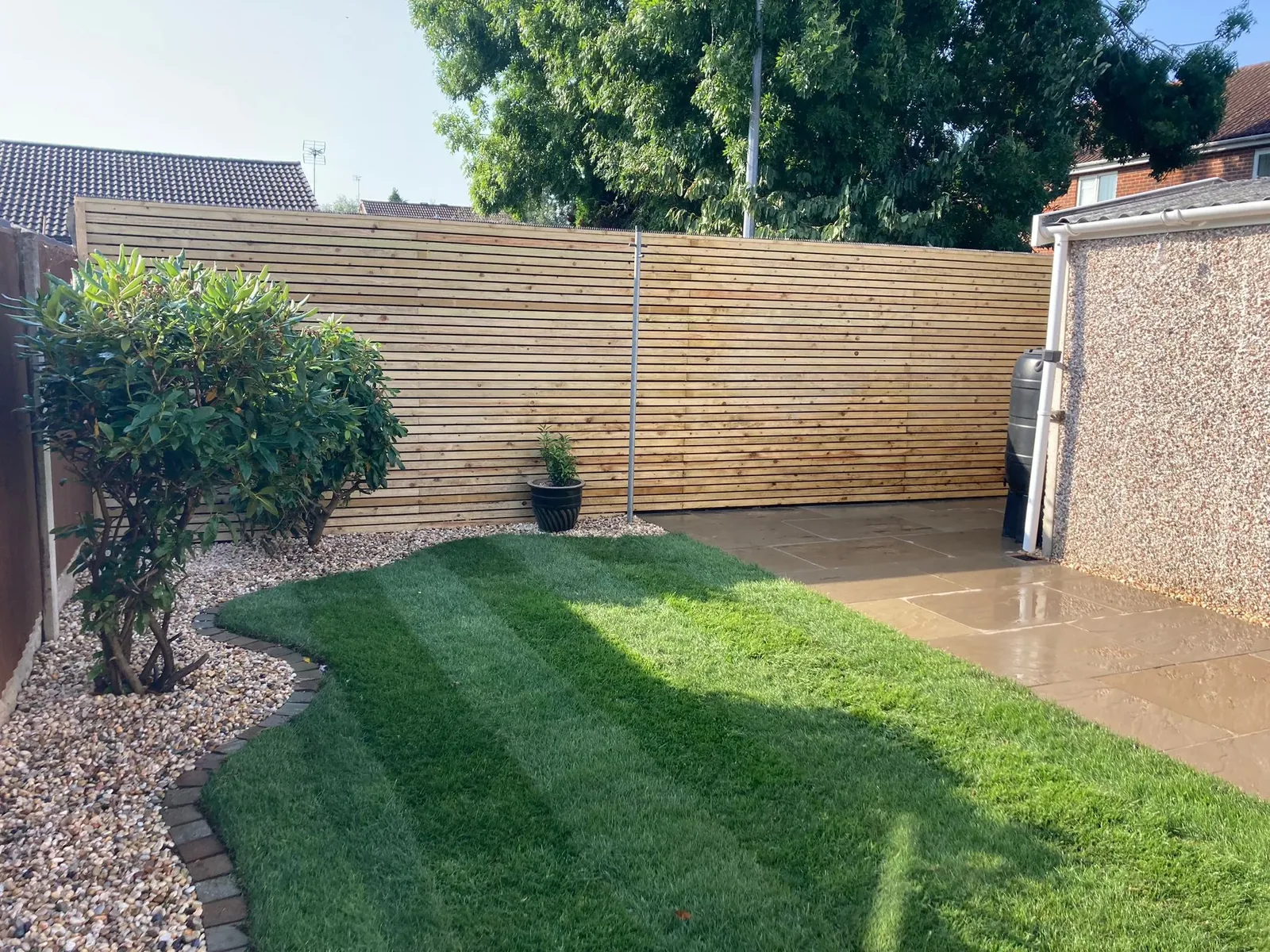
Fencing in Derby and Nottingham starts below ground, not above it: a fence is boundary, privacy and backdrop at the same time, framing everything in front of it. A poor one makes a good garden look unfinished; a good one disappears behind the planting entirely.
Most of what makes a fence last is invisible once it is up. Post depth, concrete, the spacing between posts, whether the ground was tested before anything was dug. These are quick decisions that are easy to get slightly wrong, and the cost of getting them wrong only shows up two or three years later.
32
Google reviews
Every one of them five stars
Under 12 hours
To a written quote
From the end of the site visit
600mm
Minimum post depth
Deeper where the ground asks for it
One
Named contact
First visit to last day
Fencing done properly, in the order it actually happens.
600mm minimum, deeper where the ground is loose or the run is exposed, set in concrete and left to cure.
The full run is checked for line and level, because a fence a few degrees out reads as wrong to everyone.
Every cut end is treated again on site, since an untreated cut is where rot starts.
Stepping or raking on a slope, gravel boards off wet ground: decided for your plot, not defaulted.
Posts go in at a minimum of 600mm for a standard domestic fence, deeper where the ground is loose or the run is exposed, set in concrete and allowed to cure before anything is hung on them. We check the line and the levels along the full run before fixing, because a fence that is a few degrees out reads as wrong even when nobody can say why.
Timber is treated, and cut ends are treated again on site, since an untreated cut is where rot starts. Gravel boards keep the panels off wet ground. Where a run sits on a slope we will tell you honestly whether stepping or raking suits the ground better, rather than defaulting to whichever is quicker.
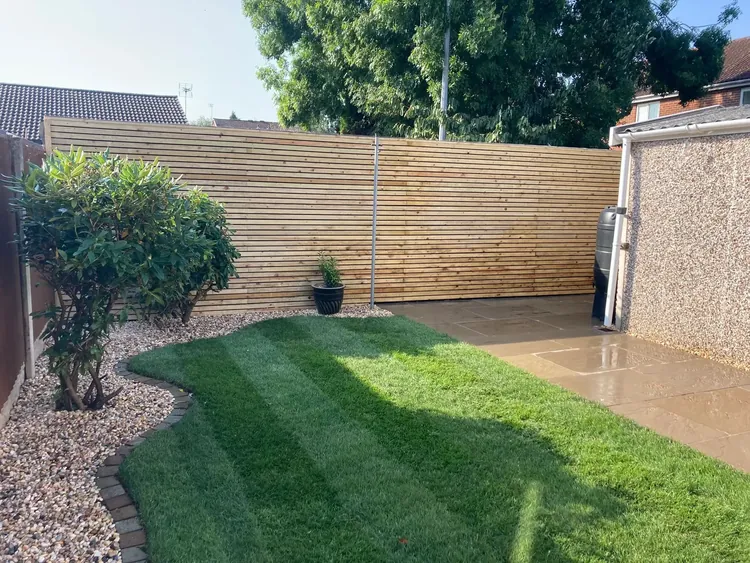
Slatted timber fencing, finished alongside new lawn and paving.
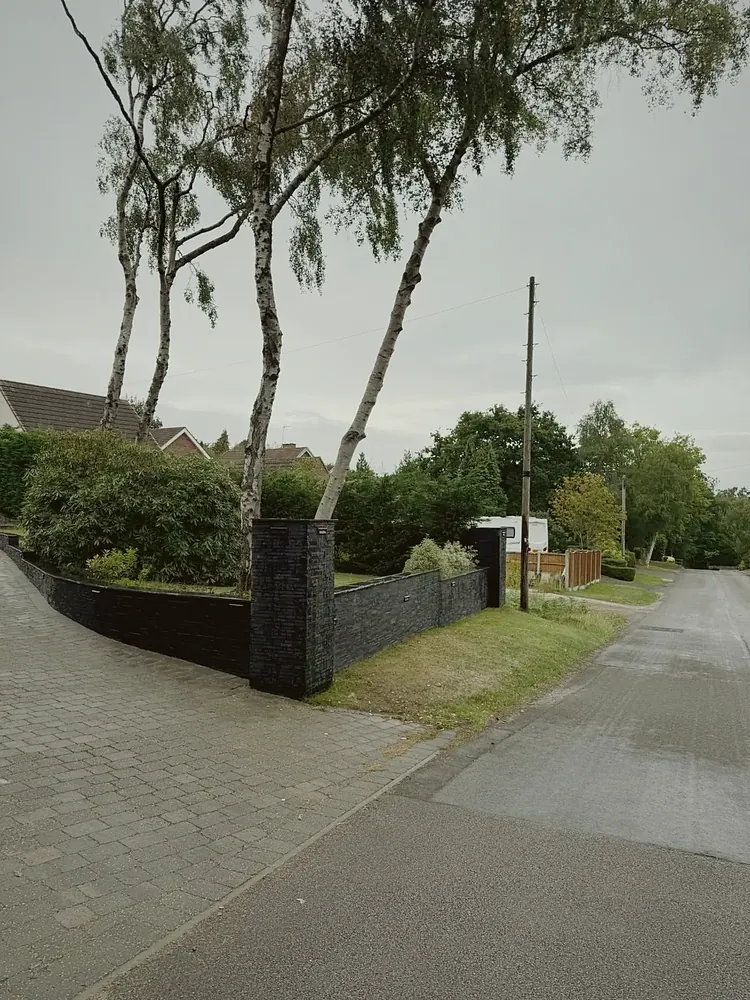
Boundary walling, built as part of the same frontage work we do alongside fencing.
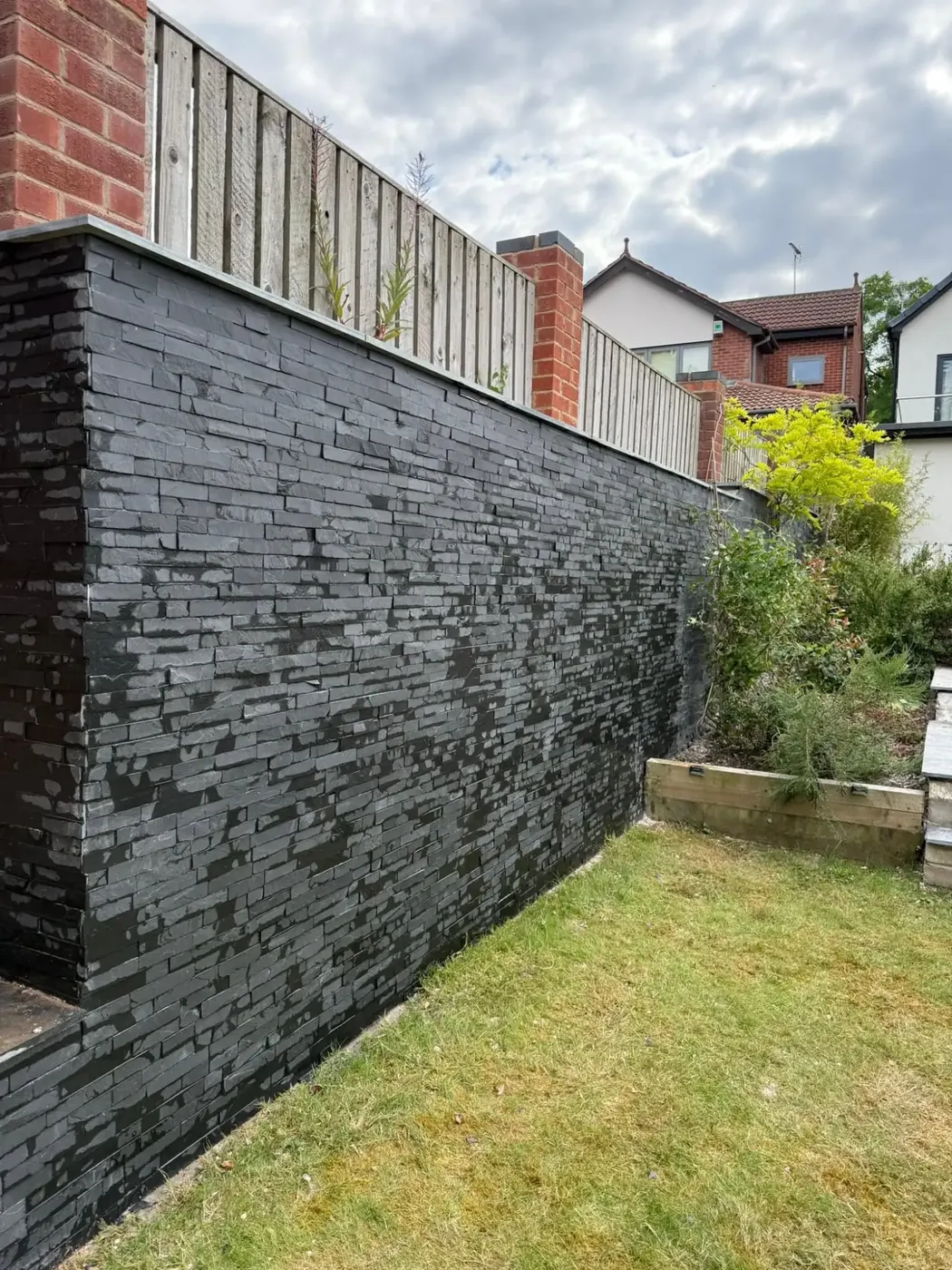
Slate-clad boundary wall, capped and finished to carry on from the fence line above it.
A fence is the edge of everything you look at.
It is the cheapest thing in a garden and the one that most often spoils the rest of it. A run that leans, a post that has rotted at the ground, a line that is a few degrees out and reads as wrong without anyone being able to say why.
So we treat it as part of the garden rather than a boundary to be put up quickly. Deeper posts than most, concrete left to cure, every cut end treated, the whole line checked before anything is fixed. None of it costs much. All of it is the difference between five years and fifteen.
Tell us the basics below and we will ring you back in under 12 hours to talk through the site before arranging a visit.
We have received your enquiry and will be in touch shortly.
Your deeds are the only reliable answer and the posts-facing-in rule is a myth. We will happily look at the plan with you before quoting.
Yes, though if the posts are the problem then replacing panels alone is money you will spend twice.
A properly set, treated fence should give you fifteen years or more. The posts almost always fail before the panels do, which is why the depth matters more than the timber.
Yes, included, unless you want to keep it.
They outlast timber and we will fit them where it makes sense. They look heavier, so it is a trade off worth seeing in context first.
Derby, Spondon, Ockbrook, Borrowash, Duffield, Little Eaton, Quarndon, Melbourne, Repton, Etwall, Willington, Aston-on-Trent, Nottingham, West Bridgford, Edwalton, Beeston, Bramcote, Ruddington, Keyworth, Hucknall, Long Eaton, Ilkeston.
Layout, drainage, access, materials, sequencing and budget, explained plainly.
10 June 2026
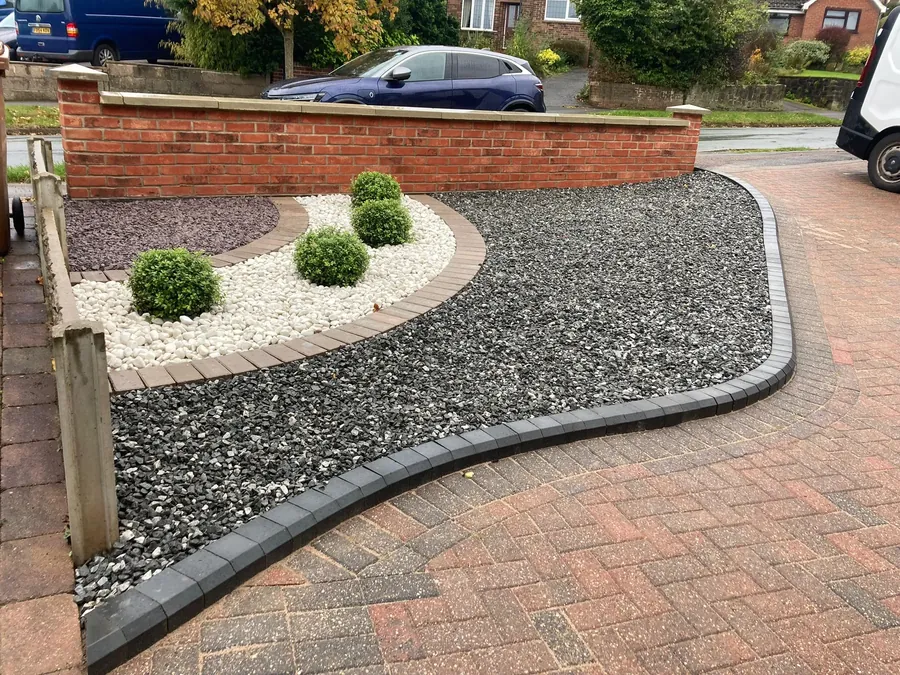
The five most common, and most expensive, mistakes in garden and fencing projects.
20 May 2026
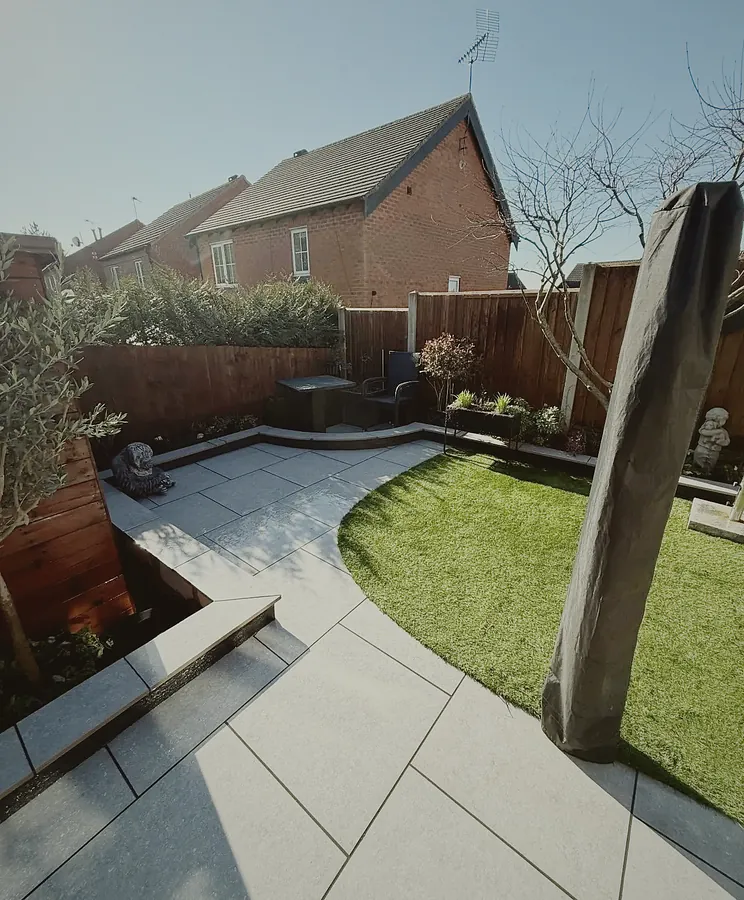
Proportion, restraint, light and honest materials, explained simply.
6 May 2026
Notes from current projects, what we have learned about building in Derbyshire clay, and the odd thing worth looking at. Once a month at most.