
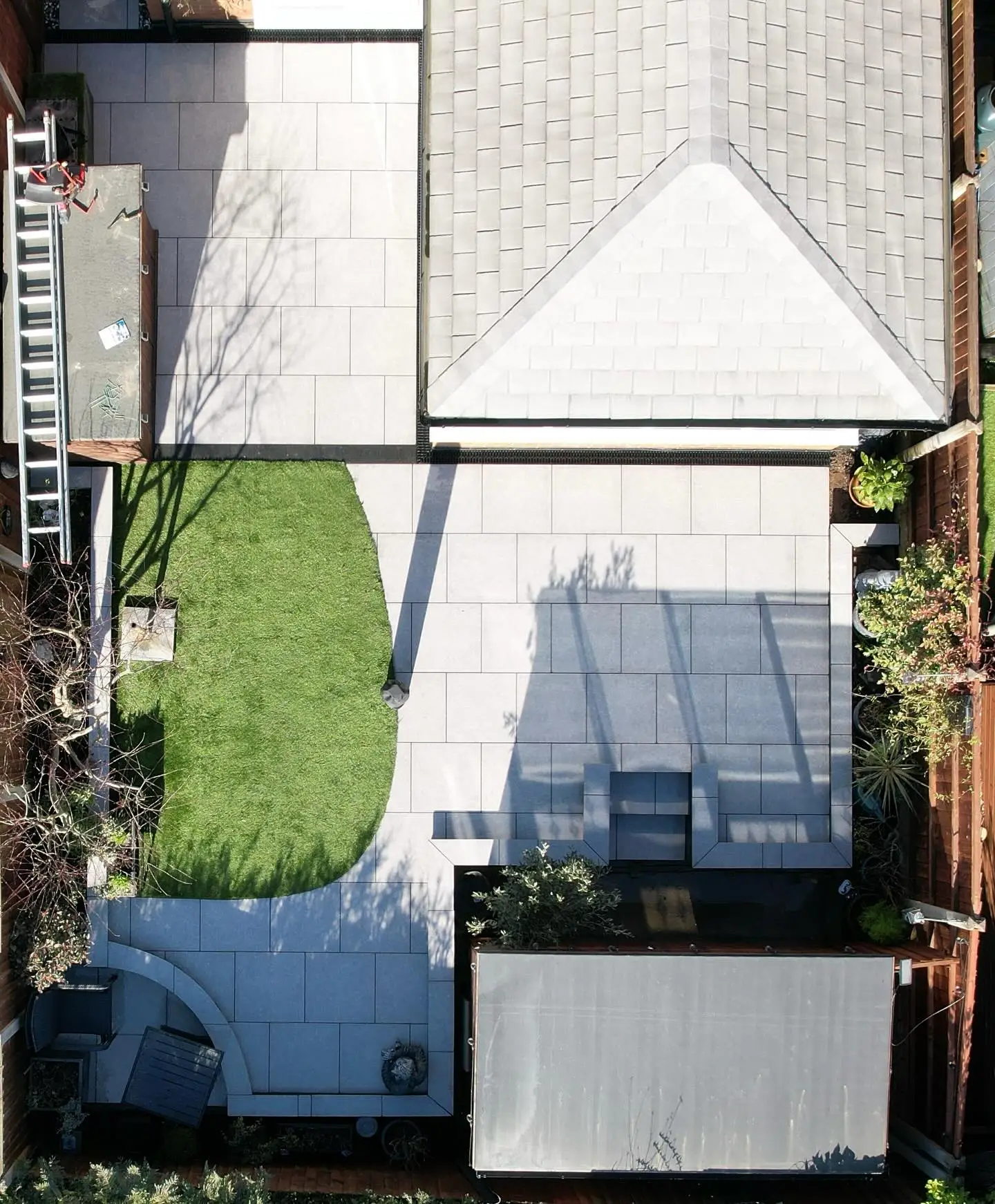
Start with how you live, not what you want built
Before you think about patios or planting, write down what the space needs to do. Do you host in the summer? Do children need somewhere to play that you can see from the kitchen? Do you want somewhere to sit with a coffee in the morning sun? The answers decide the layout, and the layout decides almost everything else.
A brief written as a list of products, like a patio, a fence and a lawn, tends to produce a garden that looks fine and gets ignored. A brief written around moments produces a space you actually use.
Decide the layout before any materials
Layout is where the value sits. Where the sun falls at different times of day, where you enter the space, how you move from the kitchen to the table, where the quiet corner should go. Get these right and even modest materials feel considered. Get them wrong and no amount of expensive porcelain will save the space.
Walk the garden at different times of day before you commit. Note where the light is at breakfast, mid afternoon and evening. The best seating spot in July at 8pm is rarely where you think it is in February.
Take drainage and access seriously, early
Drainage is the least glamorous and most important decision in the whole project. Every hard surface you add sends rainwater somewhere. A good plan decides where that is before the first slab is laid: falls, sub-base, channels and soakaways. Poor drainage shows up a year later as standing water, algae, staining and movement, and it is expensive to fix retrospectively.
Access matters just as much for cost. How will materials, machinery and waste get in and out? A rear garden with no side access is entirely workable, but it changes the method and the price, and it is much better discussed at the quote stage than discovered mid-project.
Choose materials for year five, not day one
Sandstone, porcelain, slate, resin and block paving all photograph well when new. The differences show later: how they weather, how slippery they get, how much cleaning they want, how they handle frost. Ask how each option will look and behave after five winters, and how much maintenance it expects from you. There is no single best material, only the right one for your use, your budget and your appetite for upkeep.
Understand sequencing before work starts
Good projects run in a deliberate order: groundworks and drainage first, then structures and levels, then surfaces, then boundaries, then planting and lighting last. If a quote or plan jumps straight to the pretty parts, ask what happens underneath. Changing your mind about a raised bed after paving is down costs far more than deciding it up front.
Be honest about budget, in both directions
Share your real budget with whoever you ask to quote. It is not about spending it all. It lets a good designer tell you what is achievable, what to phase for later, and where money genuinely changes the outcome. Preparation, drainage and groundwork are the wrong places to save. Decorative elements can often be phased in over time without compromising the build.
What to have ready before a site visit
- A short list of how you want to use the space, in order of priority
- Photos of gardens or driveways you like, even rough ones
- Any known issues: damp corners, poor drainage, shared boundaries
- A realistic budget range and any timing constraints
With those four things, a site visit stops being a sales conversation and becomes a working session. That is when a renovation starts properly: not with machinery, but with a clear, shared picture of what the space is for.