
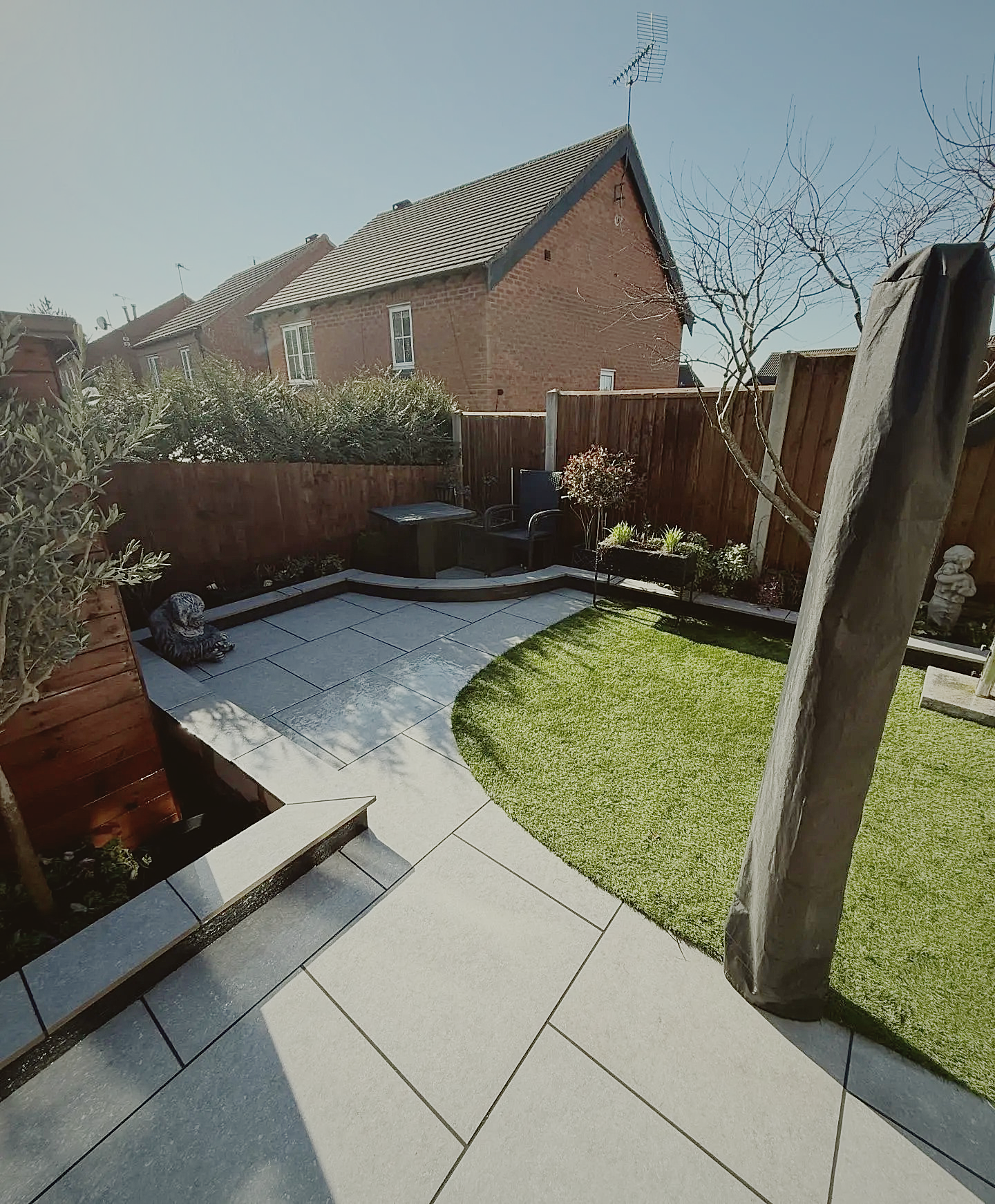
Restraint in materials
Calm spaces almost always use two or three materials, repeated with intent, rather than six used once. One paving type, one timber tone, one accent. Repetition is what reads as composure. Variety is what reads as noise. If a design excites you in a drawing but has five different surfaces, it will feel busy underfoot.
Proportion before decoration
A generous path feels calm; a mean one feels like a corridor. A terrace scaled to your actual table, with room to pull chairs back, feels settled. The same terrace half a metre smaller feels tense forever, whatever it's made of. Proportion is invisible when right and unmissable when wrong, and it costs nothing extra to get right at the planning stage.
Light through the whole day
Timeless gardens are planned around light. Morning sun on the breakfast spot. Shade where you sit at midday in July. Warm, low-level lighting for the evening rather than a single glaring floodlight. When a space works at 7am, 3pm and 10pm, it becomes part of daily life rather than an occasional stage set.
Materials that are allowed to age
Natural stone, quality timber and simple brick weather into themselves. They pick up character. Materials that imitate other materials tend to age badly, because the illusion breaks before the surface wears out. Choose things that will look honest in fifteen years, not just flawless at handover, and the garden matures instead of dating.
Structure first, softness always
Evergreen structure, from hedges, clipped forms and grasses, keeps a garden composed in January when the flowers are gone. Seasonal planting then moves across that steady frame. A garden that relies entirely on summer colour is beautiful for eight weeks and bare for the rest of the year. The calm ones are designed for February first.
Empty space is part of the design
The strongest tool in a calm garden is what's left out. An uninterrupted lawn, a plain rendered wall, a stretch of paving with nothing on it. These quiet zones give the eye somewhere to rest and make the detailed moments matter more. Resist the urge to fill every corner. The space between things is where the calm lives.
The test we use
When we review a design, we ask a simple question: will the owners still be pleased with this decision in fifteen years? Trends fail that test quickly. Proportion, light, restraint and honest materials pass it every time. That is the whole secret, applied patiently.