
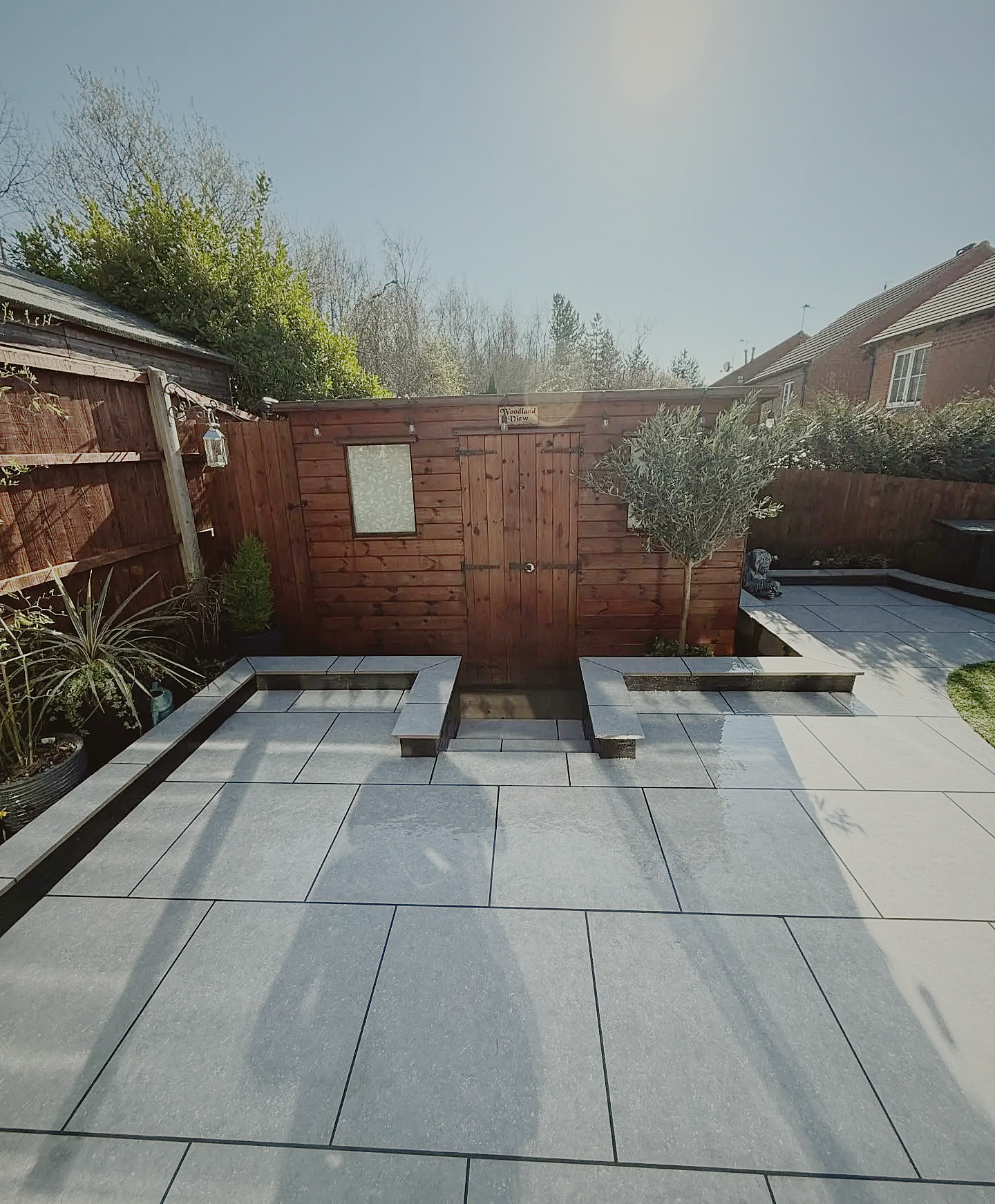
What actually drives the cost
Homeowners tend to assume the visible materials are the expensive part. Usually they're not. The big cost drivers sit underground and around the edges: excavation and ground conditions, sub-base depth, drainage, access for machinery and waste, retaining structures and levels. Two gardens with identical finishes can differ by thousands purely because of what the ground demands.
This is why prices from a photo or rough dimensions are guesses. A meaningful number needs someone to stand on the ground and look at it.
Set the budget before the design, not after
Designing first and pricing second produces heartbreak: a beautiful plan that costs double what you'd spend. Sharing a real range up front lets a designer work to it, tell you what's achievable now, and structure the rest as future phases. A good professional treats your budget as a design constraint, not a target to reach.
Spend where it can't be redone
Some parts of a project are effectively permanent: groundworks, drainage, sub-bases, retaining walls, levels and anything under a finished surface. Cutting quality there means paying to dig it all up later. Other elements, like furniture, planters, some planting and decorative lighting, can be added or upgraded any time without touching the build.
- Never economise: preparation, drainage, sub-base, structural work
- Choose carefully: surfaces and boundaries, they're semi-permanent
- Phase freely: planting density, furniture, features, extra lighting
Why the cheapest quote rarely stays cheap
When one quote is dramatically lower, something is different: shallower excavation, thinner sub-base, missing drainage, no waste disposal, no edging detail, no aftercare. Each gap becomes a future bill. A patio that fails in year three costs the original price again, plus removal. Longevity is the honest way to compare prices: cost divided by the years it will actually last.
Layout is free, so get it right
Here is the encouraging part. The thing that most affects how a space feels, its layout, costs nothing extra to get right. Moving the terrace to catch evening sun, widening a path, turning the lawn to lengthen the view: on paper these are free decisions. Spend your effort there first, then let the budget shape the materials. That order, budget, layout, longevity, is how premium spaces get built without premium waste.